

Ceylon cinnamon (true cinnamon) and cassia are often confused, but they differ in species, flavor, appearance, and health impact. Ceylon cinnamon, grown mainly in Sri Lanka, is lighter, sweeter, and safer for regular use, while cassia is cheaper, stronger, and more common worldwide.
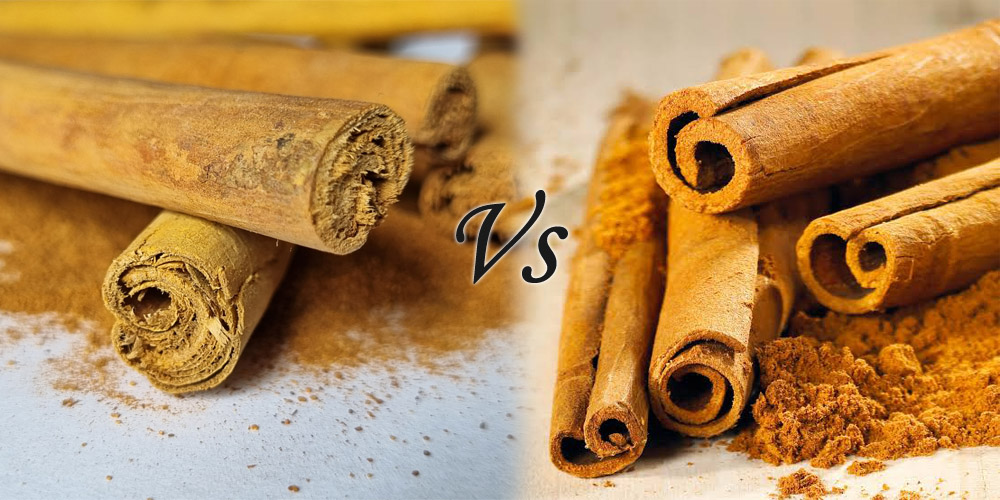
🌿 What is Ceylon Cinnamon?
- Botanical name: Cinnamomum verum (also called Cinnamomum zeylanicum).
- Origin: Native to Sri Lanka, where it is still primarily cultivated.
- Flavor: Delicate, sweet, citrus-like, and lightly floral.
- Appearance: Thin, papery quills made of multiple layers, resembling a tightly rolled cigar.
- Coumarin content: Very low, making it safer for frequent consumption.
🌱 What is Cassia?
- Botanical name: Cinnamomum cassia (also C. aromaticum, C. burmanni, C. loureiroi depending on region).
- Origin: China, Indonesia, and Vietnam.
- Flavor: Stronger, hotter, and more pungent.
- Appearance: Thick, hard bark curls, usually one solid layer.
- Coumarin content: Much higher than Ceylon cinnamon, which can be harmful in large amounts.
🌳 Are They the Same Species?
No.
- Ceylon cinnamon: Cinnamomum verum
- Cassia: Several related species (C. cassia, C. aromaticum, C. burmanni, C. loureiroi) They belong to the same genus but are different species.
👀 How to Identify Them Visually
| Feature | Ceylon Cinnamon | Cassia |
| Color | Tan/light brown | Dark reddish-brown |
| Texture | Thin, fragile, papery | Thick, hard, woody |
| Quills | Many delicate layers | One thick curl |
| Breakability | Crumbles easily | Very tough to break |
🌀 Why Does Ceylon Cinnamon Have Multiple Thin Bark Layers?
Because the inner bark of Cinnamomum verum is peeled in thin strips and rolled together. This creates multi-layered quills that are softer and more brittle compared to cassia’s single thick curls.
💰 Why is Ceylon Cinnamon More Expensive?
- Limited supply: Only ~10% of global cinnamon trade is true Ceylon.
- Labor-intensive process: Harvesting and rolling delicate quills requires skilled manual work.
- Quality: Its refined flavor and low coumarin content make it a premium product.
🍵 Which is Better for Tea?
- Ceylon cinnamon is better for tea due to its mild sweetness and delicate aroma, which blends smoothly without overpowering.
- Cassia’s strong, spicy flavor can dominate and make tea harsh.
🍲 Which is Better for Cooking?
- Cassia is widely used in baking and savory dishes (especially in North America) because of its bold, spicy punch.
- Ceylon cinnamon is preferred in desserts, light curries, and gourmet recipes where subtlety is valued.
📍 Where is True Ceylon Cinnamon Produced?
- Sri Lanka is the primary and historic producer of true Ceylon cinnamon.
- It is sometimes grown in small amounts in southern India, but Sri Lanka remains the global hub.
✅ In summary: If you want a refined, safe, and delicate spice for daily use—especially in tea—choose Ceylon cinnamon from Sri Lanka. For stronger, cheaper, and more common cooking spice, cassia is the default option, but it should be consumed in moderation due to its high coumarin content.